
Biochemistry of Functional Mushrooms
Discover below the main groups of molecules found in mushrooms, studied by scientists for their beneficial effects on health: beta-glucans, antioxidants, Hericium compounds, and Reishi triterpenes.
Key Molecules of Interest
The fungal kingdom produces a plethora of molecules that interact with our metabolic pathways. Focusing on the compounds most documented by scientific research, four major groups stand out:
Beta-glucans:
Complex polysaccharides that support metabolic pathways essential for maintaining natural defenses and overall vitality.
Antioxidants:
Molecules that protect cellular components against oxidative stress caused by free radicals.
Bioactive compounds from Hericium:
Notably hericenones (from the fruiting body) and erinacines (mainly from the mycelium), low-molecular-weight compounds capable of crossing the blood-brain barrier to stimulate the endogenous synthesis of Nerve Growth Factor (NGF), thereby promoting the differentiation, plasticity, and regeneration of neuronal processes.
Reishi triterpenes:
Such as ganoderic acids, recognized for their immunomodulatory properties and their contribution to cardiovascular and inflammatory balance.
Beta-glucans
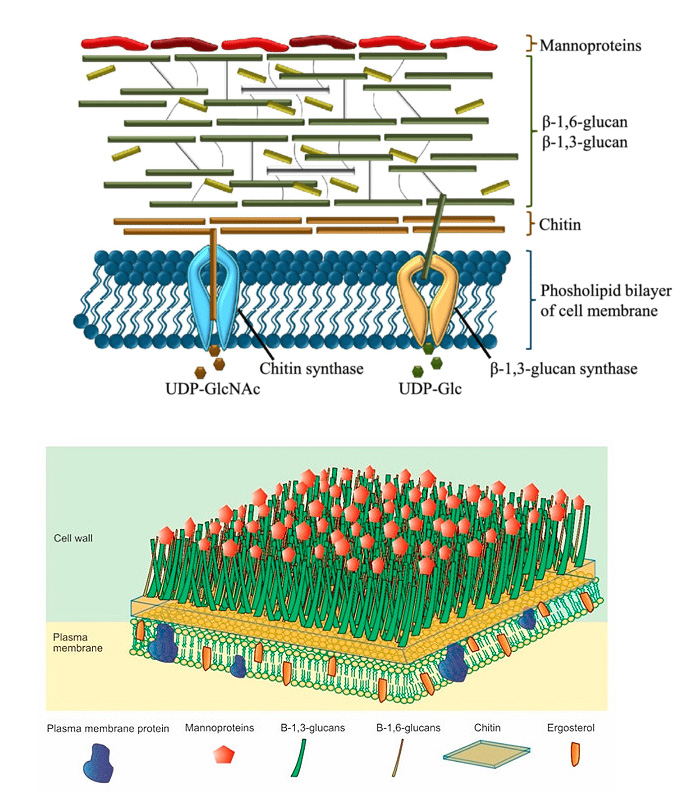
Beta-glucans are natural sugar-based polymers belonging to the large family of polysaccharides.
Unlike alpha-glucans, which serve as easily digestible energy reserves (such as starch or glycogen), beta-glucans provide a rigid structural function within the fungal cell walls.
The architecture of these chains is crucial: only structures with complex beta-1,3/1,6 linkages — featuring specific fungal branchings — possess remarkable functional properties. These are notably found in Pleurane (Oyster mushroom) or Lentinane (Shiitake).
These molecules are not “digested” in the traditional sense; they are detected by specific receptors on our intestinal immune cells. They thus act as immunomodulators, helping the body to adjust and balance its natural defenses to maintain homeostasis and overall vitality.
Antioxidants
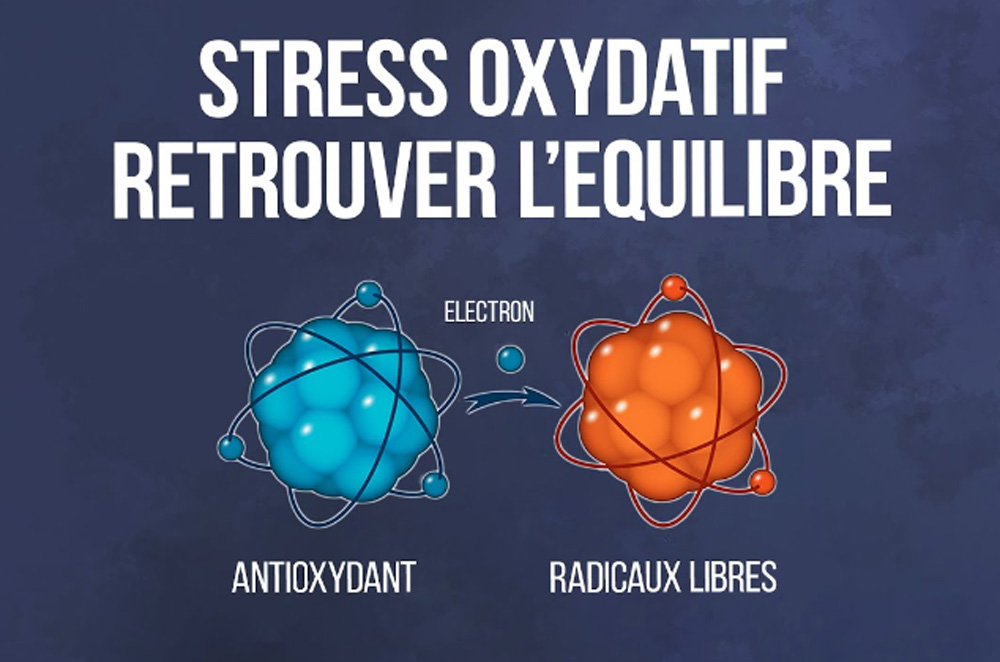
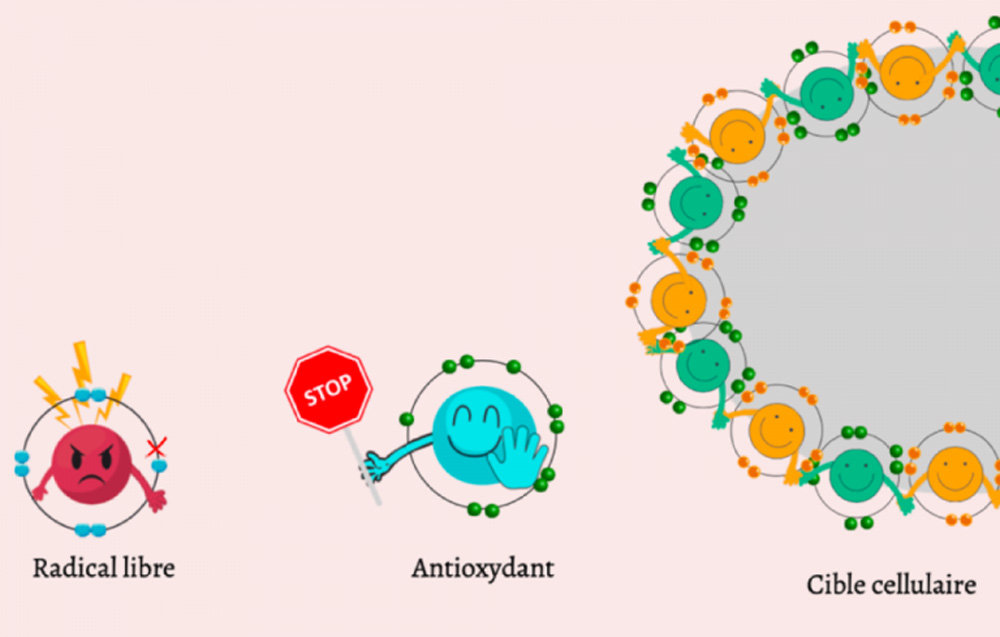
Mechanism: Antioxidants neutralize free radicals, unstable molecules resulting from oxidative stress that can damage cellular structures. By scavenging these radicals, antioxidants transform them into stable molecules, thus protecting the body’s integrity.
Documented Properties:
Immune Support: Contribution to lymphocyte vitality and maintenance of natural defense mechanisms.
Cellular Protection: Preservation of DNA integrity against oxidative damage, promoting healthy cell replication.
Circulatory Balance: Protection of blood lipids (such as LDL cholesterol) against oxidation, supporting the flexibility and health of vascular walls.
Cognitive Vitality: Neuroprotective action that preserves brain cell membranes, supporting memory and concentration functions.
Inflammatory Modulation: Helps regulate inflammatory markers, essential for maintaining joint and metabolic comfort.
- These mechanisms are the subject of numerous publications. You can consult a 2015 scientific review here, detailing the biochemical properties of fungal antioxidants.
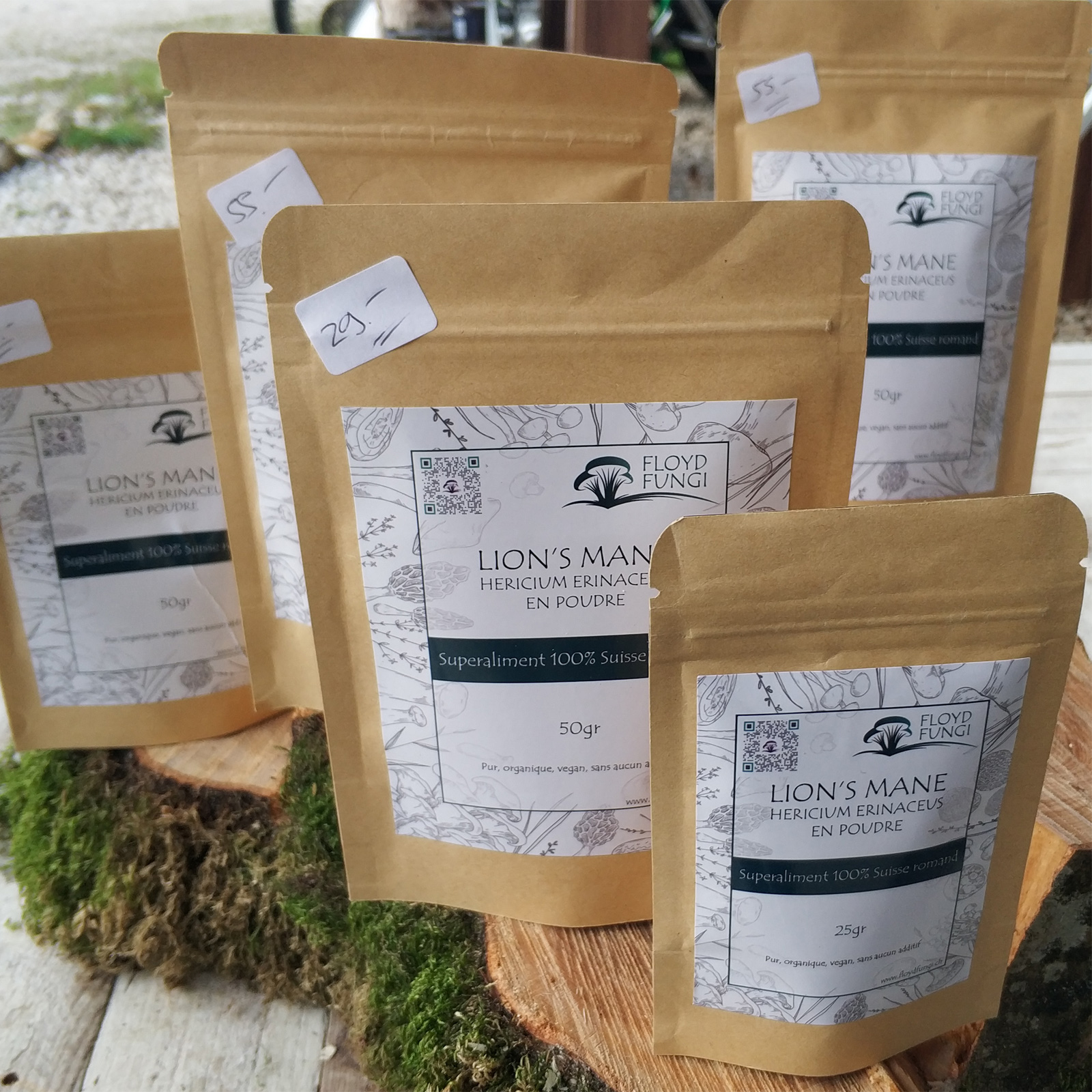
Star Compounds of Hericium
Hericenones are low-molecular-weight phenolic compounds found exclusively in the Hericium carpophore. Thanks to their ability to cross the blood-brain barrier, they act as inducers for the endogenous synthesis of Nerve Growth Factor (NGF).
Mechanisms of Action:
Neuroprotection: Supports neuronal integrity and the differentiation of cellular processes (axons and dendrites).
Cognitive Optimization: Enhances synaptic plasticity, memory, and concentration.
Our Hericium powder, derived 100% from the fruiting body, is naturally concentrated in these active molecules. By integrating it into your routine, you support your cerebral vitality while benefiting from cellular protection against oxidative stress.
Reishi Triterpenes
Reishi Triterpenes: Architects of Balance
Triterpenes, specifically ganoderic acids, are one of the major bioactive pillars of Ganoderma lucidum. These complex terpenoid molecules are studied for their unique structure, allowing them to act as profound biological regulators, promoting the body’s internal balance.
Mechanisms of Action:
Inflammatory Modulation: Helps regulate cellular inflammatory responses, contributing to long-term tissue integrity.
Immune Balance: Immunomodulatory action that helps the immune system adapt proportionally to external challenges.
Vitality Support: Scientific research highlights the importance of these compounds for cardiovascular protection (lipid profile support) and physiological stress management. The combined action of ganoderic acids promotes homeostasis and overall vitality.
Our upcoming Reishi powders, currently in development and derived exclusively from our own fruiting bodies, will guarantee a high content of these bitter compounds, a hallmark of their purity and efficacy.