
Ganoderma resinaceum
a.k.a. Yellow Reishi
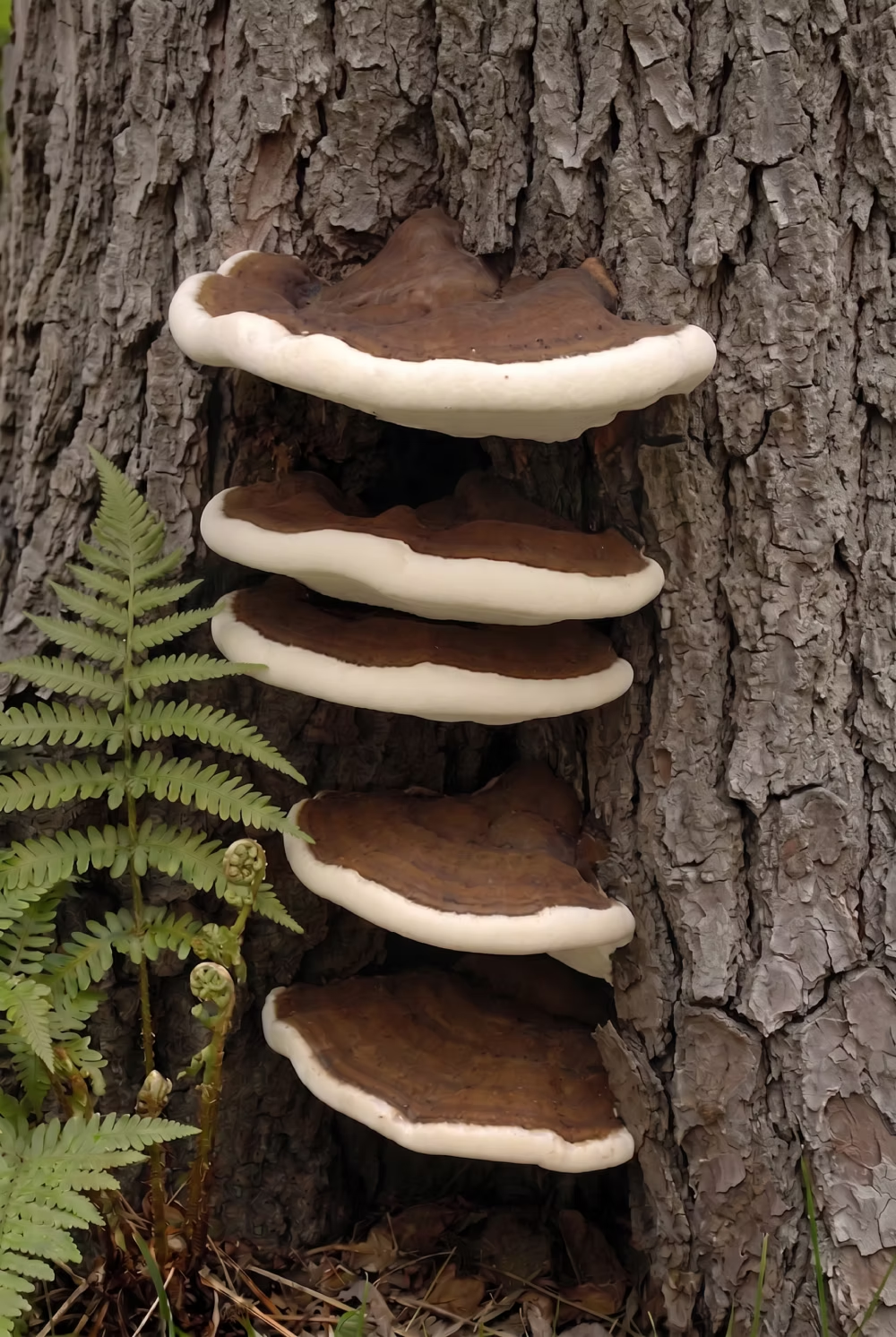
Ganoderma resinaceum, often nicknamed “Yellow Reishi” due to its bright growth margin and coppery hues, is a massive and spectacular polypore. It stands out due to a unique visual and tactile botanical characteristic: its surface develops a thick crust that secretes a resin capable of melting under a flame. While pharmacological research is beginning to isolate its specific compounds, it is truly in the field of bio-engineering that this mushroom shines. Its exceptional mycelial vigor makes it one of the most sought-after strains in the world for the creation of heavy mycomaterials.
History
Origin and natural habitat: Ganoderma resinaceum is a saprophytic wood-decaying fungus (and sometimes a weakness parasite) found primarily in warm temperate and Mediterranean regions, including Europe. It colonizes hardwoods almost exclusively, with a strong preference for oaks. Morphologically, it is characterized by a thick cap, often without a central stem, whose crust releases a yellowish or coppery resin when fresh.
Tradition: Unlike lucidum or sinense, resinaceum does not have such a well-documented isolated history in ancient Traditional Chinese Medicine texts. Due to its very strong visual resemblance, it has historically often been confused and foraged in the wild under the global name “Reishi”, thus empirically sharing its tonic uses.
Modern scientific research: Contemporary science has allowed for its precise classification through genetics and highlighted its own phytochemical profile. Researchers are particularly interested in its exceptional wealth of specific triterpenoids, studied for their powerful antimicrobial and protective actions.
Known Medicinal Compounds
Modern biochemical analyses of Ganoderma resinaceum reveal a distinct profile, focused on defense:
Triterpenoids (Ganoderic acids and derivatives): This is the signature of this species. G. resinaceum extracts are studied for their very high concentration of triterpenes, which act in the laboratory as powerful antibacterial and antioxidant agents.
Polysaccharides (Beta-glucans): Like all Ganoderma species, it contains complex sugars capable of modulating the immune response and activating macrophages.
Functional Properties and Well-being
In modern research, Ganoderma resinaceum is studied primarily for its cellular protection capabilities. Its bioactive compounds show interesting potential for supporting the immune system and offering robust antioxidant defense against external aggressions. Less clinically documented on human subjects than lucidum, it remains a species of major interest in preclinical pharmacology.
For the curious, here is the PubMed link compiling the research on this subject:
Disclaimer:
It is important to remember that studies on the therapeutic properties of these mushrooms are still ongoing. The information contained on our website does not replace professional medical advice and should not be used to diagnose, treat, or prevent diseases. Please consult a physician before using Ganoderma resinaceum for medicinal purposes. Additionally, results may vary from person to person.
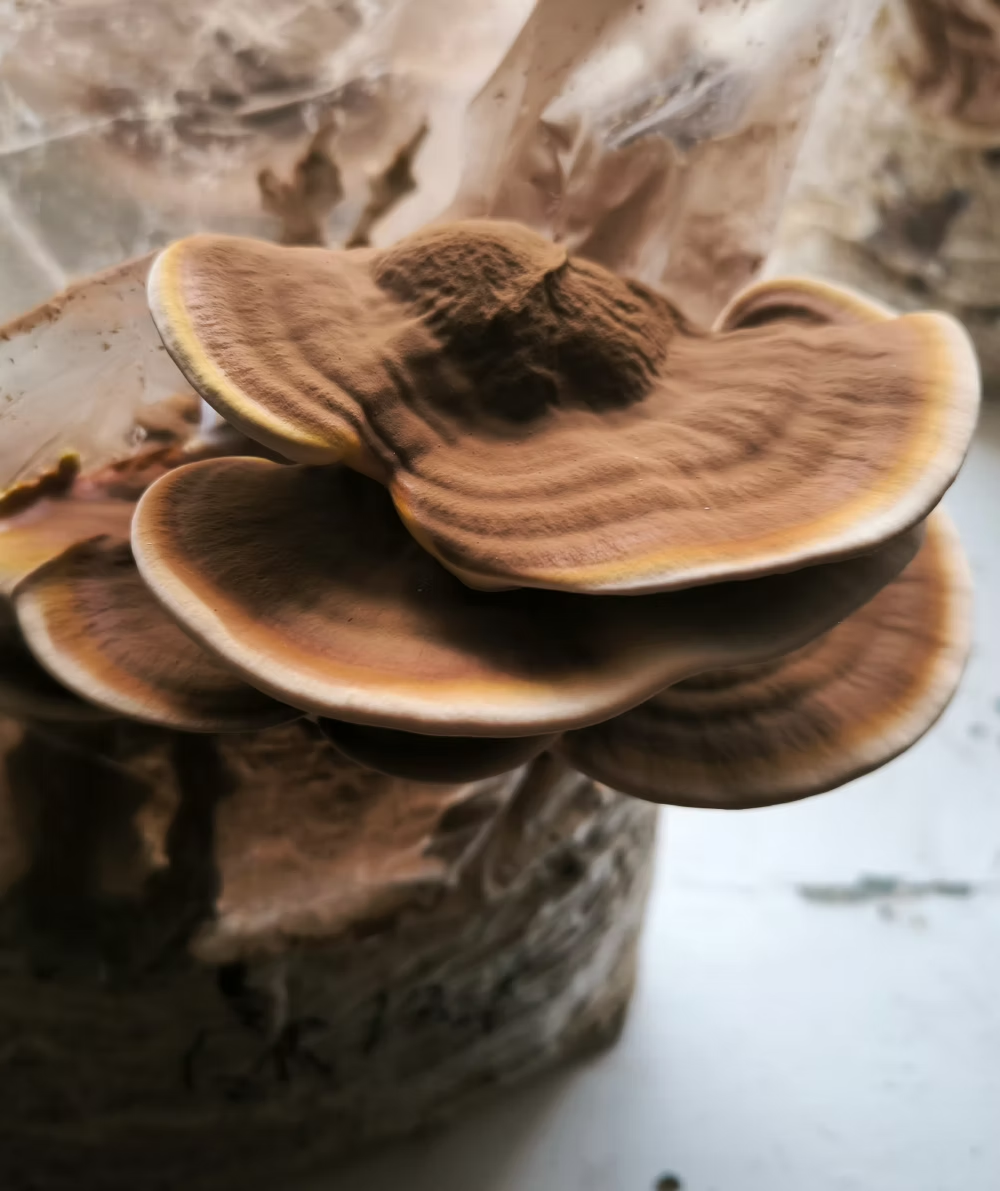
Legal Note and Home Cultivation: Unlike its famous cousin Ganoderma lucidum (Red Reishi) which is authorized, Ganoderma resinaceum is subject to “Novel Food” regulations in Switzerland as well as in the European Union. Consequently, we are prohibited from selling it in the form of ready-to-use extracts or dietary supplements. However, the law absolutely does not forbid you from cultivating it yourself! The sale of our mushroom mycelium is 100% legal: it allows you to grow this magnificent fungus directly at home, whether you want to dive into bio-design or make your own “homemade” preparations for strictly personal use.
Mycomaterials and Bio-engineering
If the Ganoderma genus is the heavyweight of bio-design, Ganoderma resinaceum is undoubtedly its industrial champion. As a strict lignivore, it requires a wood-based substrate (supplemented hardwood sawdust) to develop.
What fundamentally distinguishes this strain in material culture is its blazing colonization speed and the aggressiveness of its mycelial network. It binds wood particles with formidable efficiency, creating an internal matrix of extreme density that gives the object very high compressive strength. On the surface, by agglomerating in the open air, it forms a thick and rigid “skin” (stroma) that acts as a true exoskeleton, providing hardness and impact resistance. This is where its botanical nature becomes an additional technical asset: the presence of its famous resinous compounds in this stroma naturally reinforces the fire-retardant capabilities of the final composite.
It is this combination of an ultra-dense core and a fireproof protective skin that makes it one of the reference genetics for the development of high-performance structural eco-materials and massive castings. Experimenting with this strain at home offers the fastest and most spectacular results for creating durable art, design, or decorative objects! The precise parameters for cultivation on sawdust, incubation, and drying that allow you to fully master this living material are part of the art of bio-design… and are, in fact, often the subject of specialized introductory and advanced workshops!