
Ganoderma sinense
a.k.a. Black Reishi
Ganoderma sinense, famous under its name Black Reishi or “Zi Zhi”, is the dark and mysterious cousin of the Red Reishi (Ganoderma lucidum). Adorned with a sumptuous lacquered coat with purple and black reflections, this majestic polypore is a pillar of the Asian pharmacopoeia. While its long history fascinates herbalists, its exceptionally robust mycelium now propels it to the forefront of the bio-engineering and alternative heavy, rigid materials universe.
History
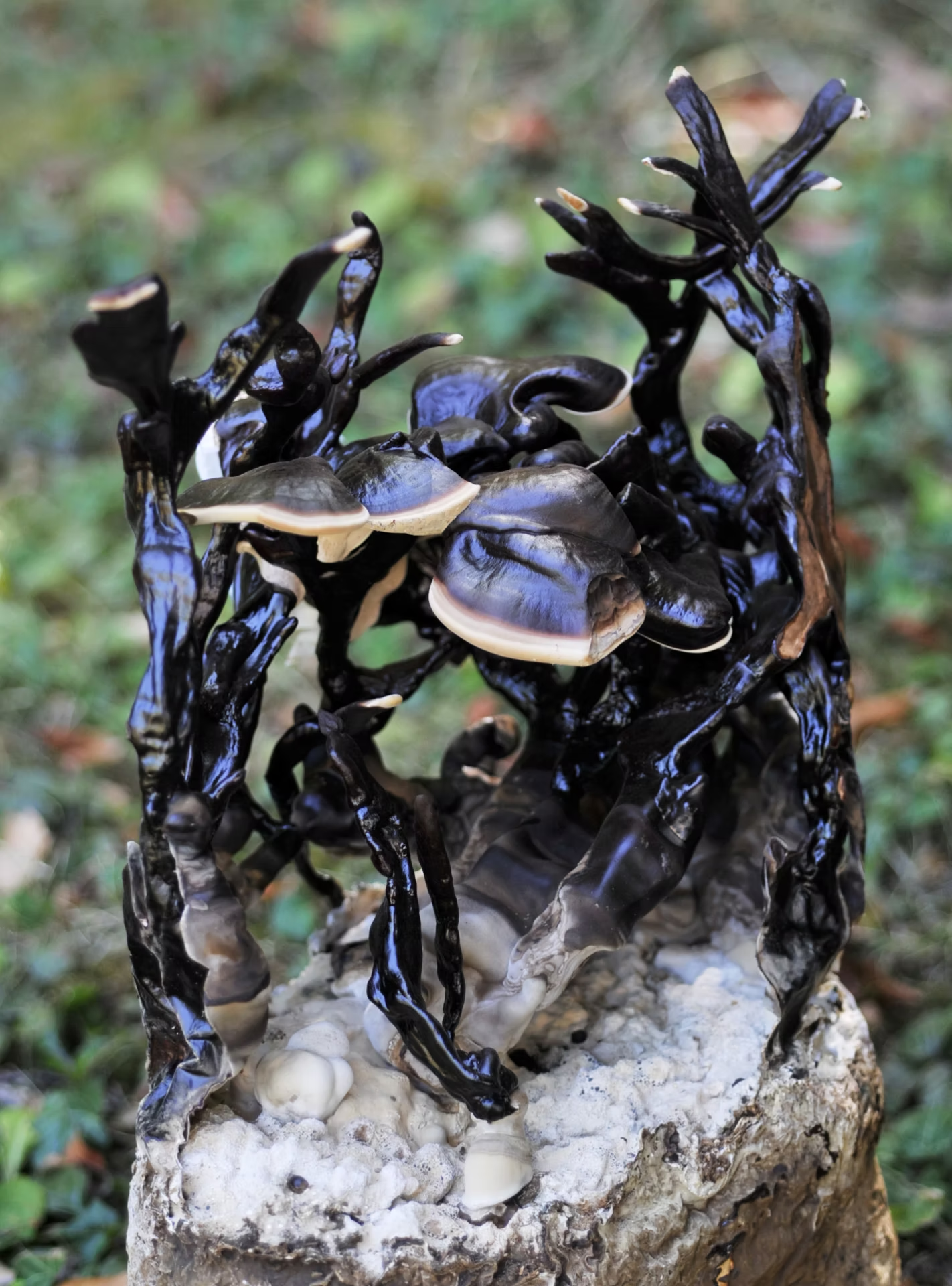
Origin and natural habitat: Ganoderma sinense is a mushroom native to East Asia (primarily China, Japan, and Taiwan). Like many polypores, this saprophyte thrives on dead wood or decaying hardwood stumps. Its kidney-shaped or asymmetrical fan-like fruiting bodies are distinguished by a hard, glossy, and deeply lacquered surface ranging from dark purple to ebony black.
A millennia-old tradition: In Traditional Chinese Medicine (TCM), it has been classified among the superior herbs for over 2,000 years. Mentioned in the oldest medical treatises under the name Zi Zhi (purple mushroom), it was traditionally prescribed in the form of long decoctions to nourish the Shen (spirit), soothe the nervous system, and rebalance vital energy (Qi).
Modern scientific research: Long confused or grouped together with Ganoderma lucidum in Western literature, Ganoderma sinense now holds its own distinct place in research. Thanks to precision cultivation, modern science is now focused on decoding its specific biochemical profile, isolating its powerful polysaccharides to study their direct impact on the immune system and cellular protection.
Known Medicinal Compounds
Although it shares similarities with the Red Reishi, the biochemical profile of Ganoderma sinense possesses its own nuances. Its extracts are studied for the following families of compounds:
Polysaccharides: Particularly rich in specific beta-glucans, these complex sugars are primarily responsible for its immunomodulatory action and its overall supportive effect on the body.
Triterpenes: Although it generally contains fewer triterpenes than Ganoderma lucidum, these compounds (such as certain ganoderic acids) give it its characteristic bitterness and contribute to its anti-inflammatory and liver-protecting properties.
Sterols and Amino acids: An excellent source of ergosterol (a natural precursor to vitamin D2) and essential amino acids, supporting cellular metabolism and physical recovery.
Functional Properties and Well-being
In terms of modern scientific research, Ganoderma sinense acts primarily as an immune modulator. Its unique polysaccharides offer foundational support for the body’s natural defenses. At the same time, its millennia-old use in traditional herbalism remains essential: historically prescribed to calm the mind, it is highly prized for supporting the nervous system, although the modern clinical validation of these mechanisms (stress and sleep management) is currently the prerogative of research conducted on its cousin, Ganoderma lucidum.
For the curious, here is the PubMed link compiling the research on this subject:
Disclaimer:
It is important to remember that studies on the therapeutic properties of these mushrooms are still ongoing. The information contained on our website does not replace professional medical advice and should not be used to diagnose, treat, or prevent diseases. Please consult a physician before using Ganoderma sinense for medicinal purposes. Additionally, results may vary from person to person.
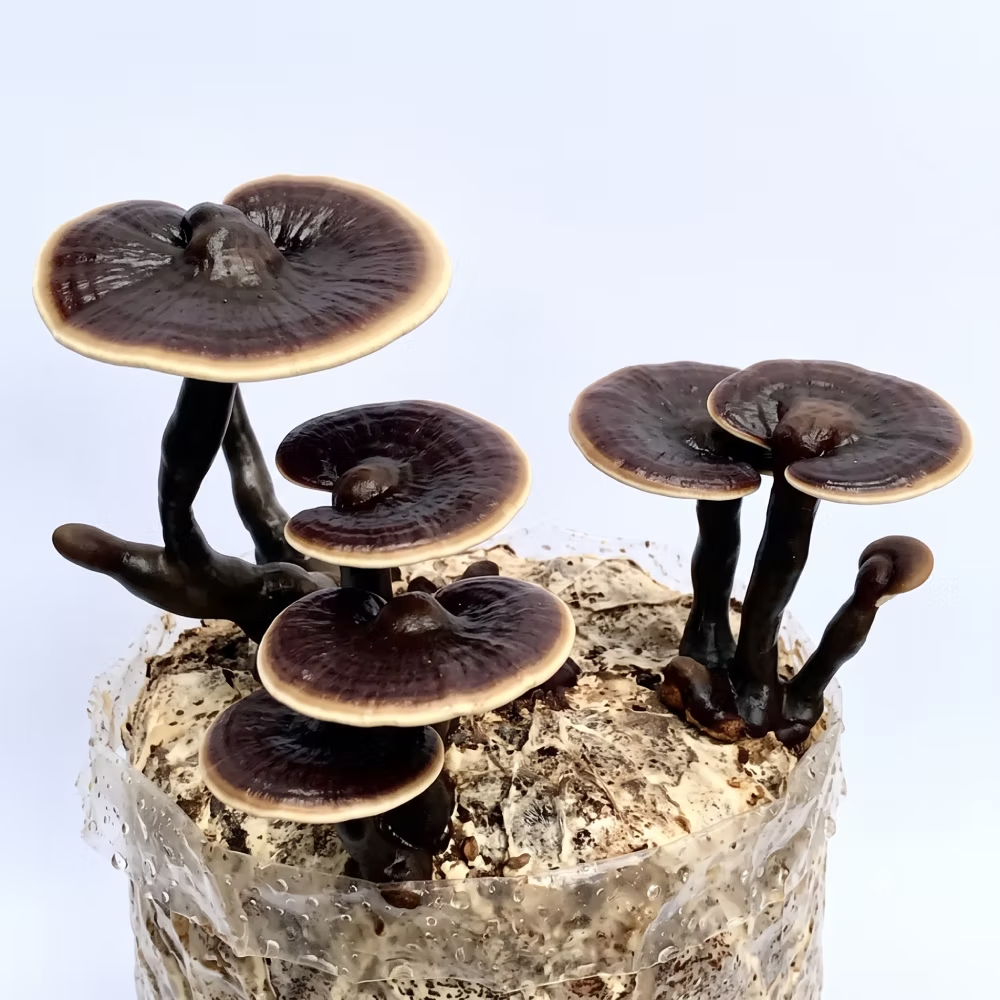
Legal Note and Home Cultivation: Unlike its famous cousin Ganoderma lucidum (Red Reishi) which is authorized, Ganoderma sinense is subject to “Novel Food” regulations in Switzerland as well as in the European Union. Consequently, we are prohibited from selling it in the form of ready-to-use extracts or dietary supplements. However, the law absolutely does not forbid you from cultivating it yourself! The sale of our mushroom mycelium is 100% legal: it allows you to grow this magnificent fungus directly at home, whether you want to dive into bio-design or make your own “homemade” preparations for strictly personal use.
Mycomaterials and Bio-engineering
If Trametes is fast and tough, the Ganoderma genus is the true “heavyweight” of the global bio-design industry. As strict lignivores, these mushrooms require a wood-based substrate (such as finely supplemented hardwood sawdust, possibly with a touch of straw acting as mechanical reinforcement) to express their full potential.
Ganoderma sinense possesses the exact same structural genetics as patented industrial strains. In material culture, its microscopic network creates a matrix of exceptional density and rigidity, with the particularity of forming a very thick and protective outer “skin” (stroma) by agglomerating in the open air. This natural composite allows for the molding of massive objects, endowed with very high compressive strength and excellent naturally fire-retardant properties.
Using sinense to create building blocks or durable decorative objects is a perfect application of these mechanics. Experimenting with this strain at home in your own molds offers an ideal introduction to the extreme structural capabilities of mushrooms! The precise parameters for cultivation on sawdust, incubation, and drying that allow you to fully master this living material are part of the art of bio-design… and are, in fact, often the subject of specialized introductory and advanced workshops!