Trametes Versicolor
a.k.a Turkey tail
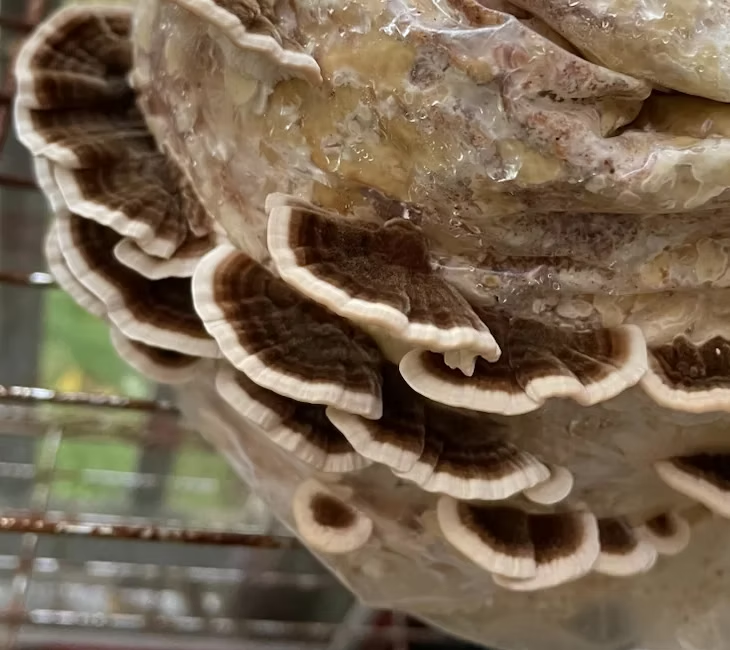
Trametes versicolor, globally known by its former scientific name Coriolus versicolor or its popular name “Turkey Tail“, is one of the most studied mushrooms in the world. Visually stunning with its multicolored concentric circles resembling a bird’s plumage, this deadwood polypore is not just a superstar of modern mycotherapy: its vigorous and dense mycelium also makes it a prime candidate for the bio-engineering of tomorrow’s materials.
History
Origin and natural habitat: Trametes versicolor is a cosmopolitan mushroom that thrives in almost all temperate forests across the globe, from North America to Asia and Europe. This wood-decaying saprophyte feeds on dead wood, favoring hardwood stumps and logs such as oak, beech, or birch. Its magnificent, overlapping fan-shaped fruiting bodies, adorned with colorful concentric bands, earned it the universal nickname “Turkey Tail”.
A millennia-old tradition: Foraged in the wild for centuries, it is deeply rooted in Traditional Chinese Medicine (TCM) under the name Yun Zhi. As early as the Ming Dynasty, it was prepared in long decoctions to purify the body, clear the respiratory tract, and fortify Qi (vital energy) to support overall immunity.
The modern scientific revolution: Its history took a turning point in the 1970s and 1980s. Asian researchers successfully cultivated its mycelium intensively in the laboratory (notably through liquid fermentation) to isolate unique compounds: PSK and PSP. Their exceptional clinical results led to their official approval in Japan and China as adjuncts to conventional oncology treatments. It was during this era that medical literature popularized it under its former name, Coriolus versicolor, a term that remains a staple in the pharmaceutical industry today.
Known Medicinal Compounds
Trametes versicolor is a true chemical shield. Its extracts are primarily studied for these major families of compounds:
Polysaccharide-peptides (PSK and PSP): These are the absolute stars of this mushroom. These unique complexes, where carbohydrates are bound to proteins, are at the center of global research for their ability to powerfully activate and modulate the immune response.
Beta-glucans: Essentially beta-(1,3) and beta-(1,4)-glucans, which act as prebiotics and support the body’s natural defenses.
Antioxidants: An exceptional wealth of phenols and flavonoids (such as quercetin and baicalein), protecting cells against oxidative stress.
Functional Properties and Well-being
Trametes versicolor is the grand specialist of the immune response. Its bioactive compounds are actively studied for their ability to support the body during periods of high vulnerability, notably to reduce fatigue and strengthen immunity during heavy medical treatments. Furthermore, its high concentration of prebiotic compounds makes it an excellent ally for modulating and balancing the gut microbiome, the true control center of our overall health.
For the curious, here are the PubMed links compiling the research on this subject (you will find studies under both of its names):
Disclaimer:
It is important to remember that studies on the therapeutic properties of these mushrooms are still ongoing. The information contained on our website does not replace professional medical advice and should not be used to diagnose, treat, or prevent diseases. Please consult a physician before using Trametes versicolor for medicinal purposes. Additionally, results may vary from person to person.
Legal Note and Home Cultivation:
In Switzerland, as in the European Union, Trametes versicolor is subject to “Novel Food” regulations. Consequently, we are prohibited from selling it in the form of ready-to-use extracts or dietary supplements. However, the law absolutely does not forbid you from foraging it in the forest or cultivating it yourself! The sale of our mushroom mycelium is 100% legal: it allows you to grow this magnificent fungus directly at home, whether you want to dive into bio-design or make your own “homemade” preparations and decoctions for strictly personal use.
Mycomaterials and Bio-engineering
Beyond health, the mycelium of Trametes versicolor is an unparalleled builder in the emerging field of bio-design. As a “white rot” fungus, it excels in breaking down lignin. In material culture, its mycelial network colonizes substrates extremely rapidly and aggressively, acting as an ultra-powerful “biological glue.”
Unlike other species that may develop a fragile or overly cottony network, Trametes stands out by creating an incredibly dense, tough, and resilient matrix. It binds plant fibers together to create three-dimensional objects that are both lightweight and strong. It is the ideal candidate for curious minds who want to experiment at home: all you need is a suitable substrate and molds of your choice to literally “grow” your own functional or decorative objects!
The precise parameters for cultivation, incubation, and drying that allow you to fully master this living material are part of the art of bio-design… and are, in fact, often the subject of specialized introductory and advanced workshops!