
Flammulina velutipes
a.k.a. Enoki
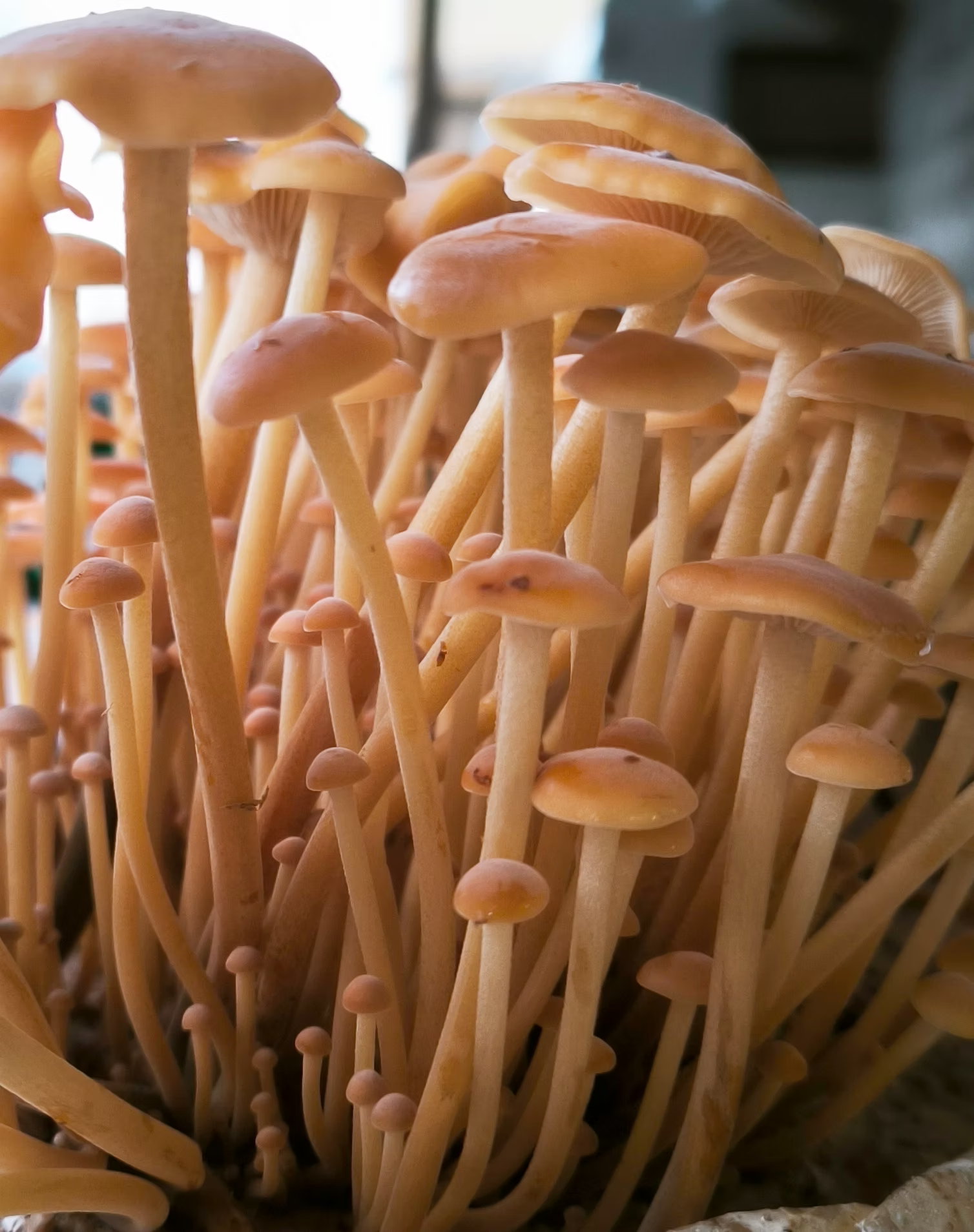
Flammulina velutipes, known worldwide by its Japanese name Enoki (or Enokitake), is the king of illusion. Indeed, its cultivated form, which resembles a delicate bouquet of long white threads topped with tiny caps, bears no visual resemblance to its wild appearance (a stocky mushroom with an orange-brown cap and a dark, velvety stem). Known as the “Velvet Shank“, it is the quintessential winter mushroom. With its incomparable crunchy texture that holds up perfectly in broths, the Enoki has become the soul of Asian hot pots (Nabemono) and an essential ingredient in modern gastronomy.
History
Natural origin: Flammulina velutipes is a lignicolous saprophytic mushroom that proliferates in the temperate and cold regions of the Northern Hemisphere. Unlike most mushrooms, it fruits from late autumn to the dead of winter, braving frost and snow. In nature, it grows in dense tufts on the dead or weakened wood of broadleaf trees, with a marked preference for elms, hackberries (hence its Japanese name Enoki, which refers to the hackberry tree), and willows.
Earliest traces: Consumed since antiquity in Asia for its mild flavor, it is one of the oldest cultivated mushrooms. As early as 800 AD in Japan, it was inoculated onto wooden logs placed outdoors during winter. Its cultivation was therefore dependent on the climate, and the harvested mushroom retained its natural wild appearance: short, brown, and stocky, with a very tough, rough stem that had to be discarded.
Present day: The Enoki is the mushroom that literally invented modern bottle cultivation in Japan during the 1920s and 1930s. Mycologists figured out how to force its morphology by manipulating its growing environment. Today, it is cultivated in total darkness (which blocks pigmentation and makes it pure white) and in a CO2-saturated atmosphere with a plastic collar around the jar. Desperately seeking oxygen, the mushroom stretches upward, developing an extremely long, thin, and tender stem, while its cap remains tiny. It is a masterpiece of environmental manipulation!
Nutritional Composition
Proteins and Amino Acids: Approximately 15 to 20% of dry weight. It stands out with a rare amino acid profile for a plant-based food, being particularly rich in lysine, glutamic acid (umami), and GABA (gamma-aminobutyric acid, a neurotransmitter).
Vitamins: Rich in B-group vitamins: B1 (thiamine), B2 (riboflavin), B3 (niacin), B5, and ergosterol (a precursor to vitamin D2).
Minerals and trace elements: High concentration of potassium, followed by phosphorus, iron, and copper. Low sodium content.
Polysaccharides: Specific beta-glucans, as well as highly studied protein-polysaccharide complexes (such as FVP – Flammulina velutipes polysaccharide).
Bioactive and secondary compounds: L-ergothioneine (antioxidant), enokipodins (terpenes with antimicrobial properties), as well as proflamin and flammulin (two glycoproteins specific to this species).
Thermolabile toxins (Raw): Contains flammutoxin, a cardiotoxic protein that is completely destroyed by heat.
Fiber: Exceptional richness in insoluble dietary fiber (chitin), excellent for the microbiota.
Culinary Delights
In the kitchen, Flammulina velutipes has one absolute rule: it must imperatively be cooked! A few minutes in a pan or boiling water (above 80°C/176°F) are enough to eliminate its natural toxin (flammutoxin) and make it perfectly digestible.
An interesting fact for amateur growers: if you decide to grow it at home in a classic way (in ambient light and open air), you will obtain its original so-called “wild” form (a magnificent orange-brown cap on a dark, velvety stem). This rustic version is a true delight! Its sweet, fruity flesh releases a subtle fragrance. It is usually sufficient to remove its stem, which is a bit tougher to chew, and cook only the caps. Once cooked, they offer an excellent bite and instantly elevate broths, stir-fries, or omelets.
Recipes coming soon!
A few recipe variations
Clear Broth (Dashi)
with Enoki
Recipes coming soon!
Garlic and Soy Sauce
Sautéed Enoki
Recipes coming soon!
Beef and Enoki Rolls
(Gyumaki)
Recipes coming soon!
Crispy Enoki
Patties
Recipes coming soon!
Winter Mushroom
Ramen
Recipes coming soon!
Butter Baked Enoki
in Foil (Foil Yaki)
Recipes coming soon!
Warm Sesame
Enoki Salad
Recipes coming soon!
Enoki Namul
(Korean side dish)
Recipes coming soon!
Rustic Toast
with Roasted Enoki
Recipes coming soon!
Enoki Pickles
in Rice Vinegar
Recipes coming soon!
Functional Properties and Well-being
For the curious, here is the PubMed link compiling research on the subject:
Disclaimer:
It is important to remember that studies on the therapeutic properties of these mushrooms are still ongoing. The information contained on our website does not replace professional medical advice and should not be used to diagnose, treat, or prevent any diseases. Please consult a doctor before using Flammulina velutipes for medicinal purposes. Furthermore, results may vary from person to person.