Pleurotus eryngii
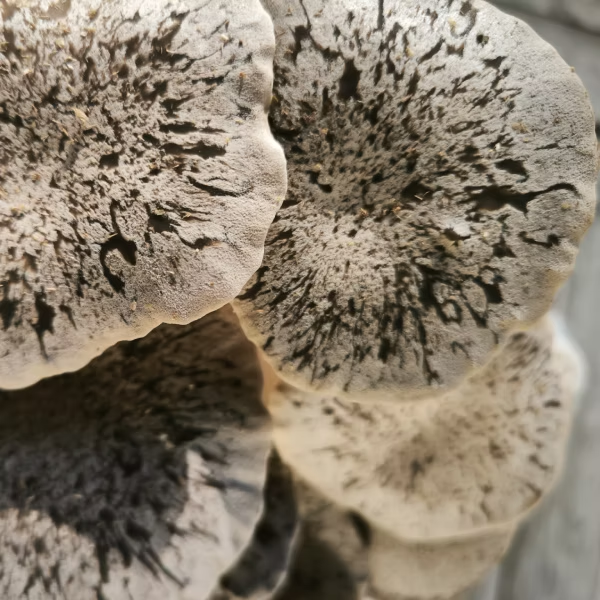
Pleurotus eryngii is the largest representative of the oyster mushroom family. Known in France as the “Pleurote du Panicaut”, this majestic mushroom travels across cultures and cuisines worldwide. English speakers highly prize it as the King Oyster Mushroom (or King Trumpet), while Italians, particularly in the Puglia region, have a true cult following for it under the name Cardoncello. Unlike its cousins (such as the grey or pink oyster mushroom) where the cap is primarily consumed, here it is the massive, meaty, and firm stem that is most highly sought after.
History
Natural origin: Unlike the majority of oyster mushrooms which are lignicolous (growing on dead wood), the King Oyster is a weak parasite. It grows naturally in the Mediterranean basin, North Africa, and the Middle East, in symbiosis with the roots of plants from the Apiaceae family (umbellifers), specifically the field eryngo (Eryngium campestre), from which it gets its name.
Earliest traces: Its wild foraging has been documented since Antiquity in southern Italy. However, its cultivation is very recent compared to that of the Shiitake. The first scientific cultivation trials took place in Italy and France in the 1970s, attempting to replicate its complex ecosystem.
Present day: Cultivation was revolutionized and industrialized by Japan and South Korea in the 1990s. Today, it is grown worldwide in controlled environments (bottle or block cultivation) on sterilized substrates made of hardwood sawdust enriched with wheat or soy bran. This method yields massive, perfectly cylindrical stems by manipulating CO2 levels during fruiting.
Nutritional Composition
Amino acids: Contains all 8 essential amino acids for humans (particularly rich in glutamic and aspartic acid, responsible for the strong umami flavor).
Vitamins: B2 (riboflavin), B3 (niacin), B5 (pantothenic acid), B6, B9 (folates), traces of C, and D2 (if exposed to UV post-harvest).
Minerals and trace elements: Potassium (highly dominant), phosphorus, magnesium, calcium, iron, zinc, copper, manganese, selenium.
Proteins: 15 to 25% (dry weight, varying according to the nitrogen level of the substrate).
Polysaccharides: beta-(1,3-1,6)-glucans (including structural fractions similar to pleuran).
Phenolic derivatives and bioactive compounds: L-ergothioneine (powerful antioxidant), gallic acid, chlorogenic acid, and lovastatin (natural hypolipidemic).
Sterols: Ergosterol (direct precursor of vitamin D2).
Fiber: 30 to 40% of dry weight (mainly insoluble fibers such as chitin).
Lectins and peptides: Eryngin (antifungal and antibacterial peptide) and eryngeolysin (defense protein).
Culinary Delights
In the kitchen, Pleurotus eryngii is a true gastronomic chameleon prized by top chefs for its versatility. Its dense, fleshy texture, which retains an exceptional bite during cooking, makes it the perfect candidate for exploring new textures—from plant-based seafood to melt-in-your-mouth pulled dishes.
Recipes coming soon!
A few recipe variations
“Vegan “Scallops”
Recipes coming soon!
“Pulled” King Oyster
Recipes coming soon!
Eryngii Yakitori Skewers
Recipes coming soon!
King Oyster Steak
Recipes coming soon!
Marinated Raw Carpaccio
Recipes coming soon!
Creamy King Oyster Risotto
Recipes coming soon!
King Oyster Tempura
Recipes coming soon!/p>
Faux-gras (Plant-based Pâté)
Recipes coming soon!
Asian Wok Stir-fry
Recipes coming soon!
Mushroom Bacon
Recipes coming soon!
Functional and Medicinal Properties
Beyond its undeniable gastronomic qualities, Pleurotus eryngii proves to be a first-rate functional food, closely scrutinized by modern medical research. A true biochemical factory, it synthesizes an impressive diversity of secondary metabolites that actively support our metabolism. Whether it is naturally regulating cholesterol (lovastatin), protecting our cells from cellular stress (L-ergothioneine), or stimulating our immune defenses (beta-glucans), this mushroom offers a synergy of active ingredients essential to our daily vitality.
For the curious, here is a link to PubMed: Pleurotus eryngii – Search results – PubMed (nih.gov)
It is important to remember that studies on the therapeutic properties of these mushrooms are still ongoing.
The information contained on our website does not replace professional medical advice and should not be used to diagnose, treat, or prevent any diseases.
Please consult a doctor before using Pleurotus eryngii for medicinal purposes. Furthermore, results may vary from person to person.